What to Do After Storm Damage to Your Roof
After high winds, it's tempting to get a ladder out. Don't. Here's what to do, in order, to keep everyone safe and give your insurer and roofer what they need.
The Short Answer
Stay off the roof and keep people clear of anything that could fall. Photograph what you can see from the ground and inside, then tell your insurer. Before any repair, get the whole roof recorded with dated photos, so your claim shows exactly what the storm did.
Your Storm Damage Checklist
Keep everyone safe
Don't climb onto the roof or up a ladder, especially in wind or rain. Keep people and cars away from anywhere slates, tiles or chimney pots could fall. If something loose could fall onto a path or road, call a roofer to make it safe.
Look from the ground and inside
From the street or garden, look for missing slates or tiles, a ridge that has shifted, bent flashing and damaged gutters. Inside, check the loft and top-floor ceilings for damp patches or dripping water.
Photograph what you can safely see
Take photos of debris in the garden, damage you can see from the ground and any water coming in. Your phone records the date and time, which helps your claim.
Stop water getting in, if it's safe
Move belongings, put down buckets and towels, and switch off electrics near any water. Leave emergency covers and tarpaulins on the roof to a roofer.
Tell your insurer early
Report the damage and ask what evidence they need. Keep receipts for any emergency work, such as a roofer making the roof safe.
Get the whole roof recorded
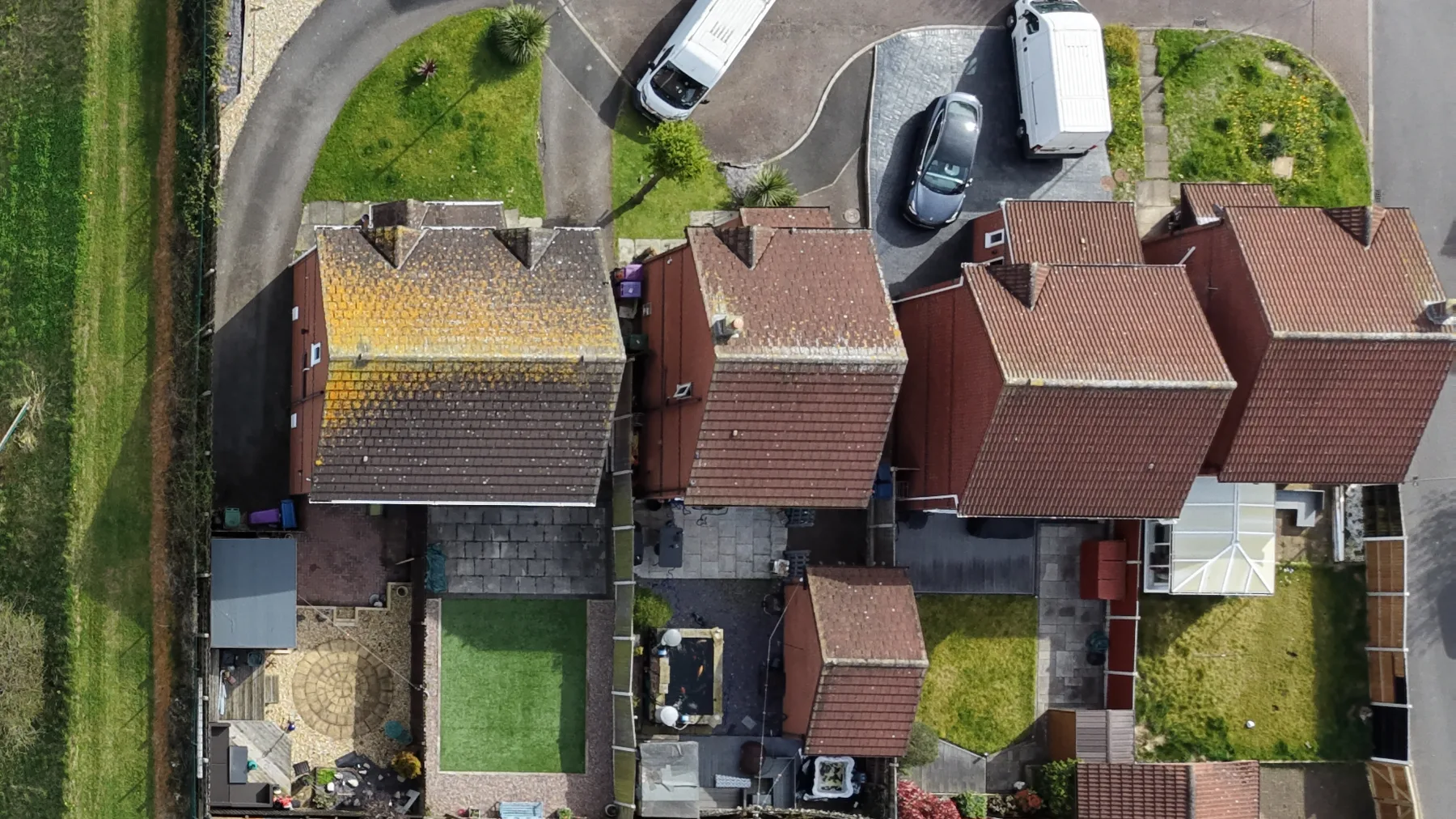
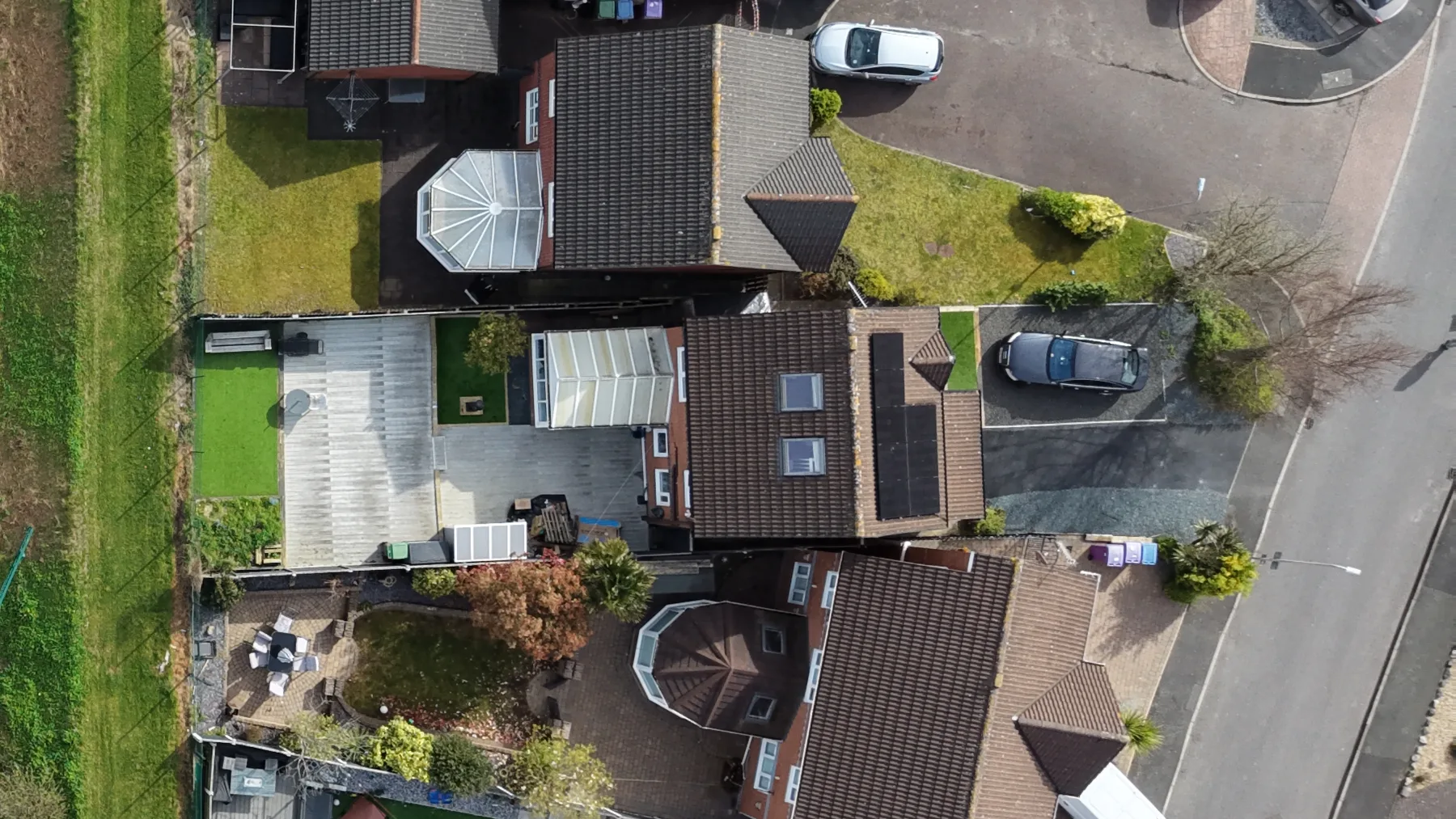
Ground photos only show part of the roof. A drone records every slope with dated photos and a video before anything is moved or repaired.
Get repair quotes
Share the photos with roofers. Marked, close-up images show them what is damaged and where, so they can quote with fewer guesses.
Why Record the Roof Before Repairs
Once a roofer starts work, the evidence of what the storm did starts to disappear. Dated photos and a video of the whole roof, taken first, show your insurer the damage as it was and let everyone (you, your insurer and your roofer) work from the same pictures.
When Can a Drone Fly After a Storm?
As soon as the wind has dropped to safe levels. Storm damage checks get a priority slot, and we fly the first safe window we can. If it isn't safe on the day, we move your flight to the next safe slot at no extra cost.
What Our Storm Damage Check Includes
Storm Damage Check
From £345
- Priority slot once winds drop to safe levels
- 30 to 60 dated photos and a video flyover of the whole roof
- Missing slates, tiles, ridge and lead marked and numbered
- Written damage summary to send to your insurer
- A 3D model of the roof if you need one
- Files within 24 hours of the flight
Not claiming on insurance? A standard Roof Inspection is from £195.
Common Questions
Does home insurance cover storm damage to a roof?
Many buildings insurance policies cover storm damage, but what counts as a storm and what's excluded varies. Check your policy wording, and report the damage early.
Should I call a roofer or book a drone first?
If water is coming in or something could fall, call a roofer to make it safe first. Otherwise, a drone check first gives you, your insurer and your roofer the full picture before any work starts.
How quickly can you come out?
Storm damage checks get priority once the wind drops to safe levels. Local jobs are usually flown within a few working days of booking, and storm damage files arrive within 24 hours of the flight.
Can you fly in the rain?
We only fly in safe conditions, with no heavy rain and wind within the drone's limits. After a storm we fly as soon as it's safe.